
Striking Workers Unemployment Insurance
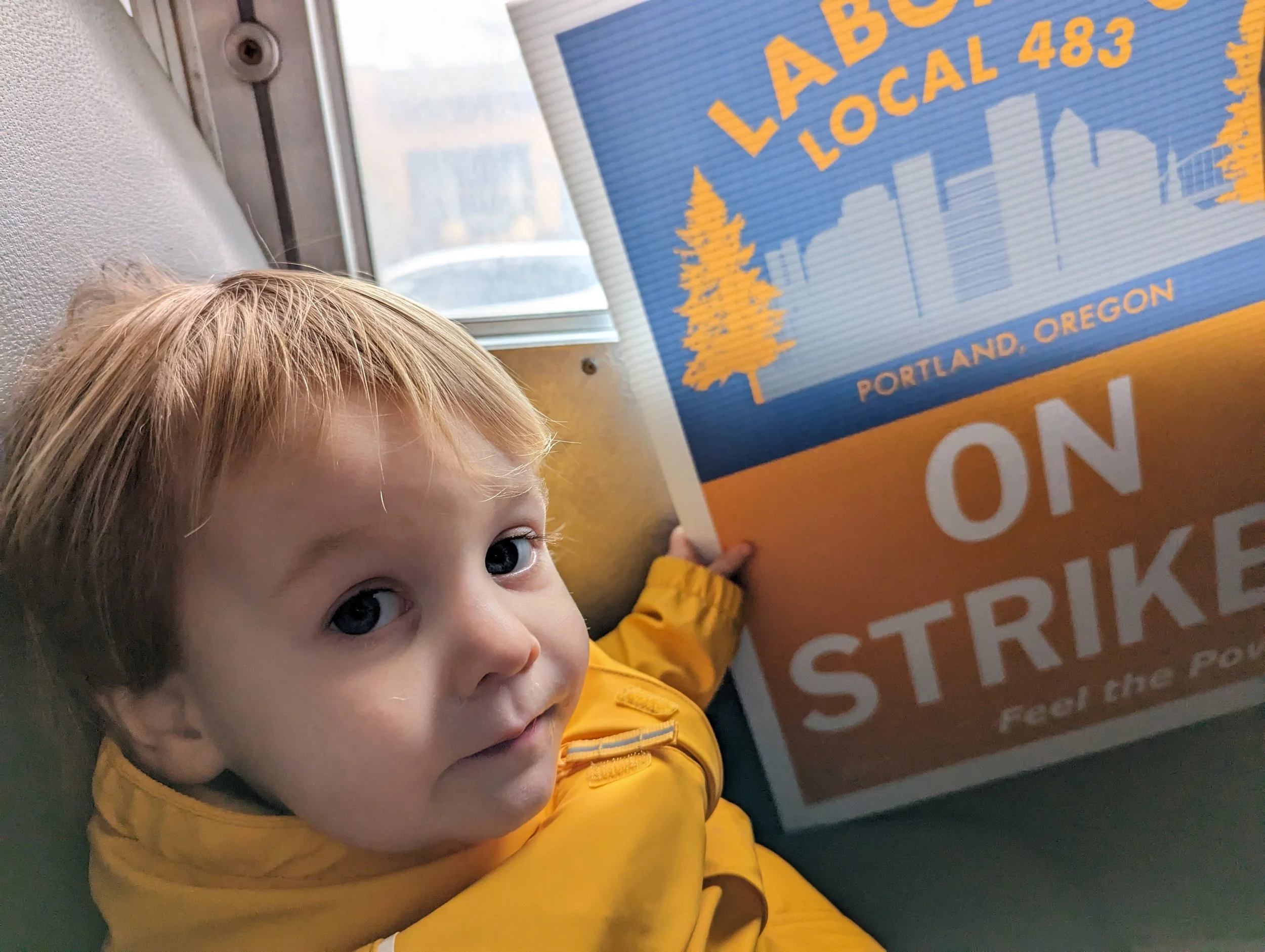
Going on strike does not mean you are automatically eligible for Unemployment Insurance (UI) benefits. There is a complicated process to walk through before you can recieve this benefit. Thankfully dedicated workers have broken down the steps to make sure you can access this fund when you need it.
You will need to register before the strike with the Oregon Employment Department (OED) and during the strike apply weekly to receive benefits. Striking workers who are eligible can expect to receive benefits in the third week of a strike, though it may take longer for your UI benefits to be approved. Follow the steps below to make sure your family recieves this earned benefit.
Step 1: Setup
Register for your Unemployment Office Frances Online account.
To register for an account, you’ll also need to provide your name, Social Security number, birthdate, and contact information. If you are not a U.S. citizen, you will need your Worker Authorization number or information from your visa, I-94, or passport.
After creating your account you will be sent a letter in the mail and in the Frances website online that tells you if you are eligible for unemployment insurance benefits and how much money you can get if you file your weekly claims . You will also get a letter advising you what to do next. If you are not eligible, the letter will tell you why not.
If you are eligible, complete the ID verification process. You will need 2-3 pieces of acceptable identification. The ID verification will need to take place in-person, either at a USPS Post Office or at an Oregon WorkSource center.
Please start the process as soon as possible to ensure you receive Unemployment checks in a timely fashion.
Step 2: Get Necessary Documents
Make sure that you save personal copies of paystubs and tax documents (like your W-2) before the strike begins. You will need them to apply for benefits.
Where can I download my pay stubs for unemployment benefits from the City of Portland?
This only gives you access to your paystubs, with the BHR login. We are allowed to view our paystubs. This login is usually different from your work computer login.
In order to apply for unemployment benefits you’ll need your work history from April 1, 2025, onwards, including:
Dates of employment
Your employers’ business names, addresses, and phone numbers
Your employer’s Federal Employer’s Identification Number (FEIN)
To find this number, check your Form W-2 (Box b) or paystub.
The City’s FEIN is 93-6002236
Your salary from each employer
Step 3: File Your Claim
To file your initial claim you will need a W-2 or Paystub, your job title, and an estimate of your start date with the City.
When asked if you are still working for this employer answer YES providing the day before the strike as your last day worked.
Under the “Which of these describes your situation?” drop down tab you want to select “Strike or Lockout” .
Answer NO to the question asking “Are you a member of a union that dispatches you to all of your work?”
Step 4: Fill Out Labor Dispute Form
The labor dispute form should be sent to you within a day of filing your initial claim. There is a time limit to fill it out, usually a week. It will show up in an email and in your “Action Items” section.
Enter the date of your last day of work – your specific last day at work.
Enter date of strike start – 12/4/2026
Select Local 483 from the list of Unions
Select Yes for the question “Is your union on strike?”
Select YES for the question “Has the contract between the union and the employer expired?”
Step 5: Submit Weekly Claims
Once the strike starts, file an initial registration AND weekly claims. You should file your weekly claims even if you are still waiting for approval of your initial registration. There is a two week waiting period before OED starts making payments, the first week is the waiting week and the second week is the strike waiting week. Keep submitting weekly claims during this time. If you make over $72,160: the expected benefit is $902 pre-tax.
To be eligible for benefits, federal law requires striking workers to be able to work, available to work, and actively seeking work. Therefore, OED requires striking workers to complete at least one work-seeking activity each week. Examples of work-seeking activities are:
Registering for job placements with the Oregon Employment Division (OED)
Updating a resume
Updating your profile on LinkedIn or another job-seeking site
Attending a job placement meeting sponsored by OED
Participating in a job club or networking group dedicated to job placement
Making direct contact with an employer
Reviewing job placement websites or newspaper without responding to a job posting